
A grandmother’s voice on a porch. A church fan moving through August heat. The names of men and women buried without markers. The kitchen where children listened while adults lowered their voices. Black artists preserving community memory understand that these are not small details. They are evidence. They are the record left behind when official histories decide a people’s pain, labor, intelligence, and love are not worth preserving.
For generations, Black American life has been documented unevenly. Census records reduced people to categories. Plantation papers counted human beings as property. Textbooks celebrated national progress while passing quickly over the hands that built the wealth, the families divided by sale, and the communities that made life after bondage. Art has long answered that silence. It keeps faces before us. It gives shape to testimony. It refuses to let the past be cleaned up for comfort.
Why Black Artists Preserving Community Memory Matter
Community memory is not nostalgia. It is a living account of how people survived, what they carried, and what the nation demanded they forget. A painting of an enslaved woman in a Southern kitchen may hold more than a historical scene. It can force the viewer to confront skill, exhaustion, watchfulness, family separation, and the constant calculation required to stay alive under someone else’s power.
That is why visual storytelling carries such force. A date in a textbook can be ignored. A face looking back from a canvas is harder to dismiss. A graphic-novel panel can place readers inside the tension of a nighttime escape, a freedom celebration shadowed by danger, or a Reconstruction-era family trying to claim a future that America kept trying to take away.
The work is not about making suffering into decoration. It is about restoring humanity where the record has been cruelly thin. It is about saying that ordinary Black people were never background figures in American history. They were parents, soldiers, cooks, farmers, teachers, preachers, craftsmen, organizers, mourners, and dreamers. They made choices under pressures many modern viewers cannot imagine.
The Archive Is Bigger Than the Courthouse
Official archives matter, but they are not the whole archive. Many Black families have inherited history through photographs with names missing from the back, recipes, quilts, funeral programs, Bible pages, porch conversations, and the memory of a road that once led to a settlement no longer on the map. These fragments are vulnerable. Once an elder dies, a story can disappear with them.
Artists can gather those fragments without pretending every gap can be filled. In fact, the gaps often belong in the work. An empty chair, an unfinished name, a graveyard swallowed by weeds, or a family photograph with a torn edge can tell the truth about historical loss. The absence is part of the evidence.
This requires discipline as well as imagination. Research gives the work its bones: period clothing, geography, labor practices, military records, local newspapers, oral histories, and family documents. Art gives it breath. The best historical work does not claim certainty where certainty is impossible. It makes a careful distinction between what is known, what has been handed down, and what has been imaginatively reconstructed to honor a human truth.
Memory Needs Place, Not Just Dates
American history is often taught as if it happened in grand rooms between famous men. But community memory lives in particular places: a coastal town, a railroad stop, a neighborhood church, a rural schoolhouse, a field, a barbershop, a cabin, a city block cleared in the name of development.
When Black artists place history in these settings, they push back against a national habit of abstraction. Slavery was not merely a chapter. It happened in homes, kitchens, auction yards, and fields. Emancipation was not a single clean moment. It arrived unevenly, with celebration and terror standing in the same doorway. Segregation was not only a law. It shaped where a family could sleep, work, learn, shop, and safely gather.
Place also prevents the past from becoming distant. A viewer may recognize a courthouse square, a riverbank, or a row of shotgun houses. That recognition creates a moral question: What happened here? Who lived here before the marker, the condominium, the highway, or the polished tourist plaque?
Art Can Hold Contradiction
There is a temptation to make historical art either comforting or punishing. Both approaches can flatten the people being remembered. Black community memory contains grief, but it also contains humor, courtship, invention, religious faith, style, music, argument, tenderness, and joy. Survival itself was never a colorless act.
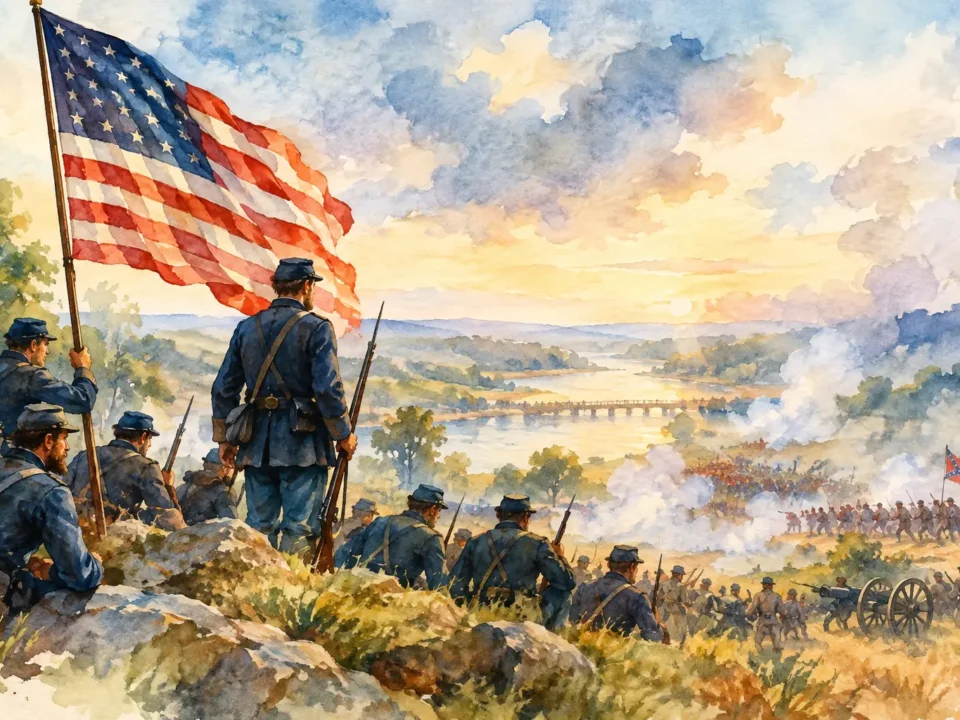
A truthful image can hold this complexity. It can show a family meal under the shadow of oppression without pretending the meal was meaningless. It can show Black soldiers fighting for the Union while asking whether the nation they defended would ever fully defend them. It can honor ancestors without turning them into flawless symbols.
That complexity matters because sanitized history is not the only danger. Simplified pain can also become a kind of erasure when it denies people their full emotional lives. The goal is not to make the past easier to consume. The goal is to make it harder to dismiss.
Who Gets to Tell the Story?
Black artists do not need permission to tell Black history, but responsibility remains central. Working with inherited trauma demands care. Not every family story belongs in public. Not every violent image needs to be shown. Sometimes the most ethical choice is restraint, consultation, or leaving a private wound private.
The question is not whether art should confront brutality. It should, especially when brutality has been hidden behind polite language. The question is how to confront it without exploiting the dead or reducing Black life to spectacle. Context, research, specificity, and reverence make a difference.
For collectors, educators, and readers, this means choosing work that asks something of you. Does the image merely borrow the appearance of history, or does it carry historical weight? Does it give Black subjects agency and interior life? Does it name the forces that shaped their lives, rather than presenting injustice as an unfortunate fog with no perpetrators?
A Record for the Next Generation
Children inherit more than property. They inherit silences. When a family cannot name where it came from, when a school cannot explain what happened in its own county, when public monuments honor power but not survival, silence begins to feel normal.
Art interrupts that inheritance. A print on a wall can start a conversation that a lecture never could. An illustrated book can give a young reader a way into difficult history without insulting their intelligence. A painting can become a family heirloom not because it is expensive, but because it tells the truth about what people endured and how they remained.
This is one reason visual history belongs in homes, classrooms, libraries, and community spaces. It does not replace scholarship or archival work. It opens the door to them. A reader moved by an image may ask for the names, the documents, the local history, and the voices behind it. That question is where deeper learning begins.
Newson Publishing approaches this work with that conviction: no sugarcoating, no erasure, just the story. The story is painful in places. It is also filled with courage that polite history has too often overlooked.
Memory as a Form of Repair
Truth-telling alone cannot repair every wound. A painting cannot return stolen labor, restore a destroyed neighborhood, or undo a century of denial. But no honest repair begins with amnesia. A country that cannot look plainly at its past will keep mistaking old injuries for new misunderstandings.
Black artists preserving community memory offer a different path. They bring the buried record into view and ask us to sit with it. Not to wallow in blame. Not to trade one false story for another. To see clearly enough to become more responsible to one another.
Keep the names. Ask the elders. Study the place where you live. Put work on your walls that makes forgetting impossible. Memory is not a burden handed down from the dead. It is a charge from the living: tell the truth, carry it forward, and make room for a more honest future.